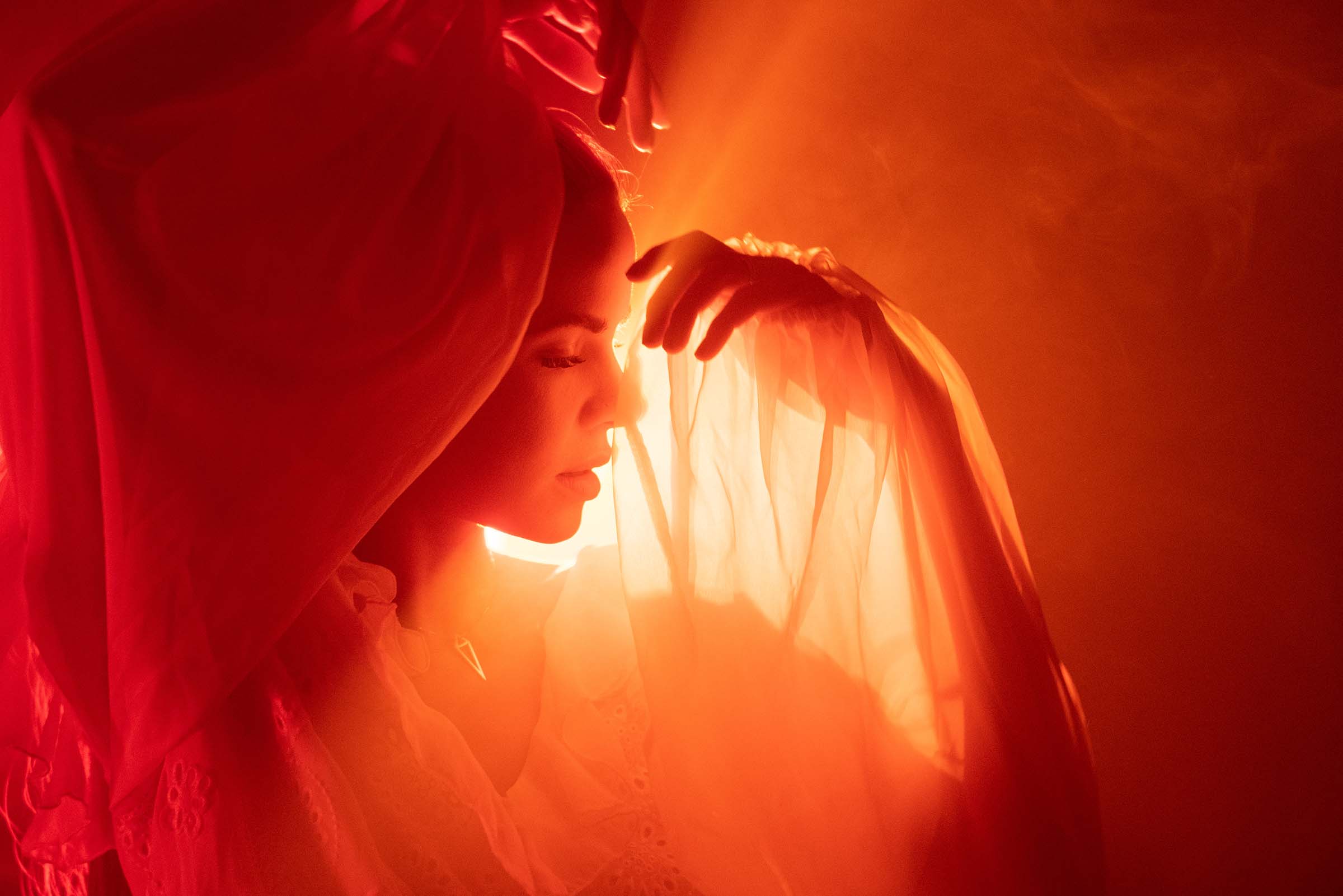
The body of work I call Forests of the World did not begin in a studio. It began in Borneo, where I witnessed two things at once: the destruction of rainforest, and the fragile, stubborn work of its restoration. I stood in a place that was being unmade and remade at the same time, and I understood that I could not depict it from the outside. I had to belong to it.
That is the origin of everything I now make. Before Borneo, I understood, intellectually, that art could be “about” the environment. After Borneo, I understood that the separation implied by that little word, about, was the problem. We speak of nature as a subject, a landscape, a backdrop for human affairs. But we are not separate from nature. We are expressions of it. The destruction I saw was not happening to some external scenery; it was happening to us, to the same living current that moves through an artist’s hand.
So the work changed. Forests of the World became a body of work in which the art and the cause could not be pulled apart. It reaches toward reforestation, and alongside it Animalize, my global project for conservation, makes each animal portrait an act of advocacy for a species. When I created a mural at a bear sanctuary in Vietnam, or worked with a community recovering from the Altadena wildfires, I was not illustrating resilience. I was joining it.
Borneo taught me the discipline I now call impact art: that aesthetic production is inseparable from ecological and cultural consequence. It taught me that a beautiful image which changes nothing is a missed opportunity, and that a work of art can carry a prayer, a warning, and an act of restoration all at once. It taught me that reverence is not passive. A transcribed prayer, a forty foot wall, a planted tree, a protected forest: they are all the same sentence spoken at different volumes.
I am sometimes asked whether art can really do anything in the face of ecological crisis. My answer comes from that rainforest. Restoration there did not begin with certainty that it would work. It began with people who decided to act as though the living world were worth their devotion. Art is how I make that decision visible. At the core, we are one, and I make images to help us remember it before we forget.